
At the southernmost tip of Maryland’s western shore, a narrow peninsula reaches into the waters where the Potomac River meets the Chesapeake Bay. Today, this scenic place is known as Point Lookout State Park. Visitors come for fishing, boating, coastal views, wildlife, camping, and quiet walks beside the water. However, beneath the park’s peaceful appearance lies one of the most complex and emotional histories of any public park in Maryland.
Point Lookout has served as Indigenous homeland, colonial property, navigational landmark, military hospital, Union fortification, prisoner-of-war camp, lighthouse station, resort destination, and state park. Each era left a different mark on the landscape. Although many historic structures have disappeared because of storms, erosion, development, and the passage of time, the stories connected to Point Lookout remain an important part of Maryland and American history.
This complete guide to Point Lookout State Park history explores the peninsula’s early settlement, its famous lighthouse, its major role during the Civil War, the experiences of prisoners and soldiers, and its transformation into the park visitors know today.
Where Is Point Lookout State Park?
Point Lookout State Park is located in St. Mary’s County near Scotland, Maryland. It occupies the end of a long peninsula bordered by the Potomac River on the west and the Chesapeake Bay on the east. The meeting of these two major bodies of water gives Point Lookout its distinctive geography and sweeping waterfront views.
The park’s remote location is part of its appeal. Travelers who drive south through St. Mary’s County pass farmland, small communities, historic churches, and waterfront landscapes before reaching the end of Maryland Route 5. The road effectively ends at Point Lookout, creating the feeling of arriving at the edge of the state.
This geographic position has shaped nearly every chapter of Point Lookout’s history. Its location made it useful for navigation, maritime observation, military defense, medical treatment, and the confinement of prisoners. At the same time, its exposed shoreline made the area vulnerable to severe weather, flooding, erosion, and isolation.
Point Lookout Before European Settlement
The recorded history of Point Lookout did not begin with European exploration. Indigenous communities lived throughout the Chesapeake Bay region for thousands of years before English settlers arrived. The waterways surrounding the peninsula provided fish, shellfish, transportation routes, fertile wetlands, and access to neighboring settlements.
Several Indigenous groups occupied what is now southern Maryland, including communities connected to the Piscataway people. Rivers and bays were central to their daily lives, economies, social networks, and seasonal movements. Although later European records often focused on land grants and colonial ownership, Point Lookout was part of a much older cultural landscape.
Recognizing this earlier history is important because the peninsula was not an empty wilderness waiting to be claimed. It existed within a populated region with established communities, traditions, and relationships to the land and water.
Captain John Smith and Early Colonial Maryland
English explorer Captain John Smith traveled through the Chesapeake Bay region during the early 1600s. According to the Maryland Department of Natural Resources, Smith explored the Point Lookout area in 1612. The peninsula’s position at the entrance to the Potomac River made it a recognizable landmark for ships navigating the region.
In 1632, King Charles I granted the Maryland colony to George Calvert, the first Lord Baltimore. After George Calvert’s death, the colonial charter passed to his son, Cecilius Calvert. Leonard Calvert, another of George Calvert’s sons, led the first Maryland colonists and became the colony’s first governor.
Leonard Calvert claimed Point Lookout as part of his personal manor in 1634. Despite its strategic location, the peninsula did not become a major colonial town. Its low-lying terrain, exposure to storms, marshy areas, and distance from larger settlements limited extensive development.
For generations, the surrounding region remained largely rural. Farming, fishing, transportation, and small-scale maritime activity supported local communities. Ships moving between the Potomac River and Chesapeake Bay regularly passed the point, reinforcing its importance as a navigational landmark.
The Construction of Point Lookout Lighthouse
As maritime traffic increased during the late 1700s and early 1800s, the need for a dependable navigational light became clear. The waters near Point Lookout could be dangerous, particularly during storms, fog, darkness, and changing tides. Ships entering or leaving the Potomac River needed help identifying the tip of the peninsula.
Point Lookout Lighthouse was constructed in 1830 by Maryland lighthouse builder John Donahoo. The original structure was considerably smaller than the building seen today. According to the Maryland Department of Natural Resources, the lighthouse initially stood approximately one and a half stories tall and cost $3,350 to build.
The lighthouse keeper and the keeper’s family lived inside the building while maintaining the light. Their responsibilities included trimming wicks, cleaning lenses, carrying fuel, recording weather conditions, and making sure the light operated throughout the night. Life at the remote station could be lonely and demanding, particularly during periods of rough weather.
In 1883, the lighthouse was expanded to two full stories, and the light was raised to approximately 41 feet above sea level. Additional changes were made as lighting technology improved. The lighthouse remained an important aid to navigation for more than a century before being decommissioned in 1966.
The building still stands near the tip of the peninsula. Although access may be limited and conditions can change, the lighthouse remains one of the most recognizable symbols of Point Lookout State Park history.
Point Lookout During the Civil War
The most significant period in Point Lookout’s recorded history began during the American Civil War. Maryland remained in the Union, but the state was deeply divided. Many Maryland residents supported the United States, while others sympathized with or actively supported the Confederacy.
Point Lookout’s location made it valuable to the Union government. The peninsula was surrounded by water on three sides, relatively isolated from major population centers, and accessible by military transport ships. These characteristics made it suitable for a hospital complex, military defenses, supply operations, and eventually a large prisoner-of-war camp.
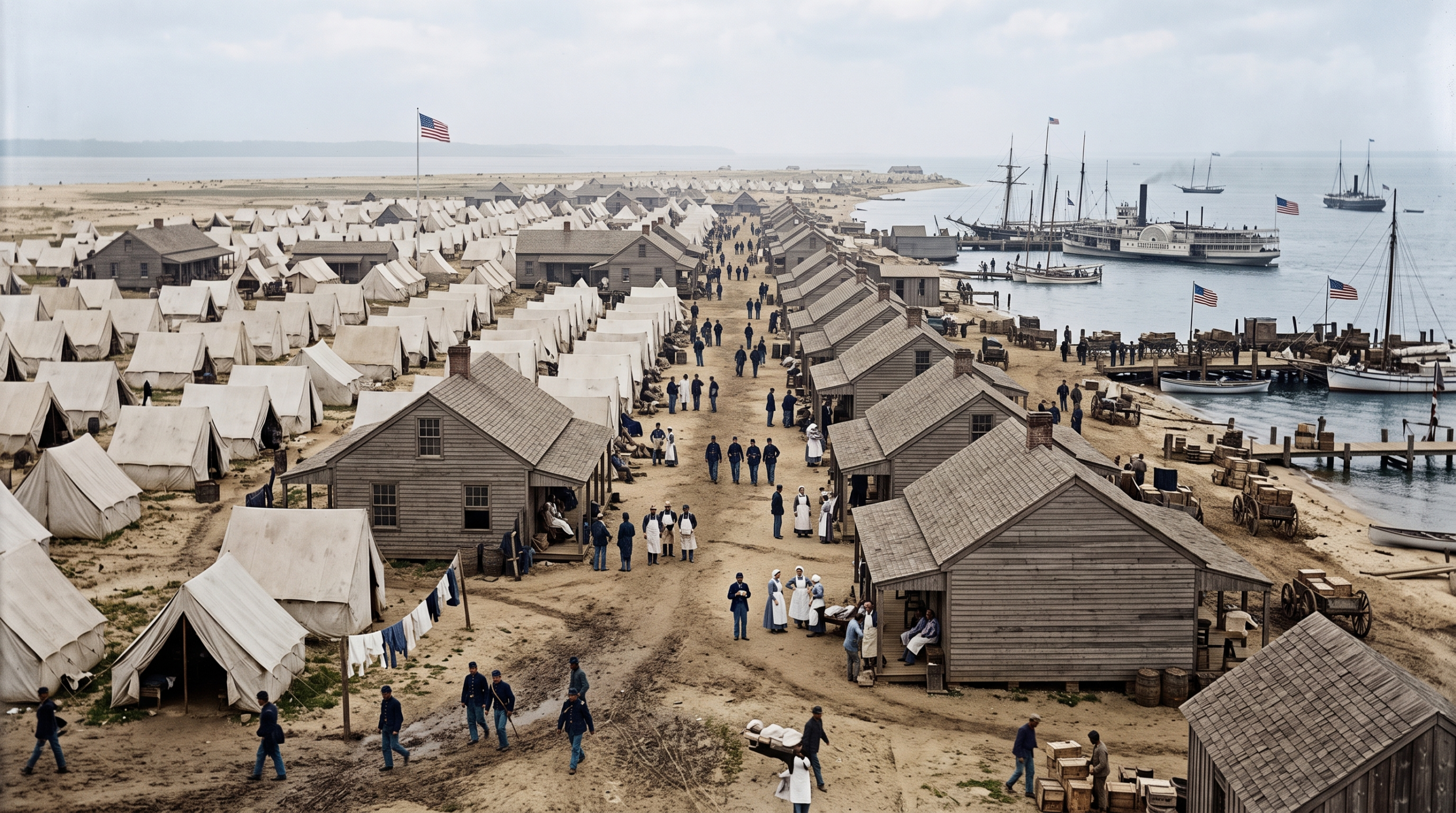
In 1862, the federal government established Hammond General Hospital at Point Lookout. The hospital was named for William A. Hammond, who served as surgeon general of the United States Army. It was constructed to care for soldiers wounded or sick during the war.
The hospital consisted of multiple wards and support buildings arranged near the shoreline. Ships transported wounded soldiers from battlefields and military facilities to the peninsula. Some patients recovered and returned to service, while others remained for extended treatment or died from wounds and disease.
Point Lookout became especially busy after major military campaigns. The hospital treated Union soldiers, Confederate prisoners, and other patients connected to the war. Nurses, physicians, civilian workers, soldiers, boat crews, and laborers all contributed to the operation of the medical complex.
The Point Lookout Prison Camp
In 1863, the Union government established a prisoner-of-war facility at Point Lookout. Officially named Camp Hoffman, it became one of the largest military prisons operated by the United States during the Civil War.
The prison was created as the number of captured Confederate soldiers increased. After battles such as Gettysburg, Union authorities needed additional places to confine prisoners. Point Lookout appeared suitable because its geography reduced the likelihood of escape. The Chesapeake Bay and Potomac River formed natural barriers, while Union gunboats could patrol the surrounding waters.
At first, officials planned for the camp to hold approximately 10,000 prisoners. The number of captives soon exceeded that intended capacity. Over the course of the war, tens of thousands of Confederate prisoners passed through Point Lookout. Maryland’s official park history states that as many as 52,264 Confederate soldiers were imprisoned there during the Civil War.
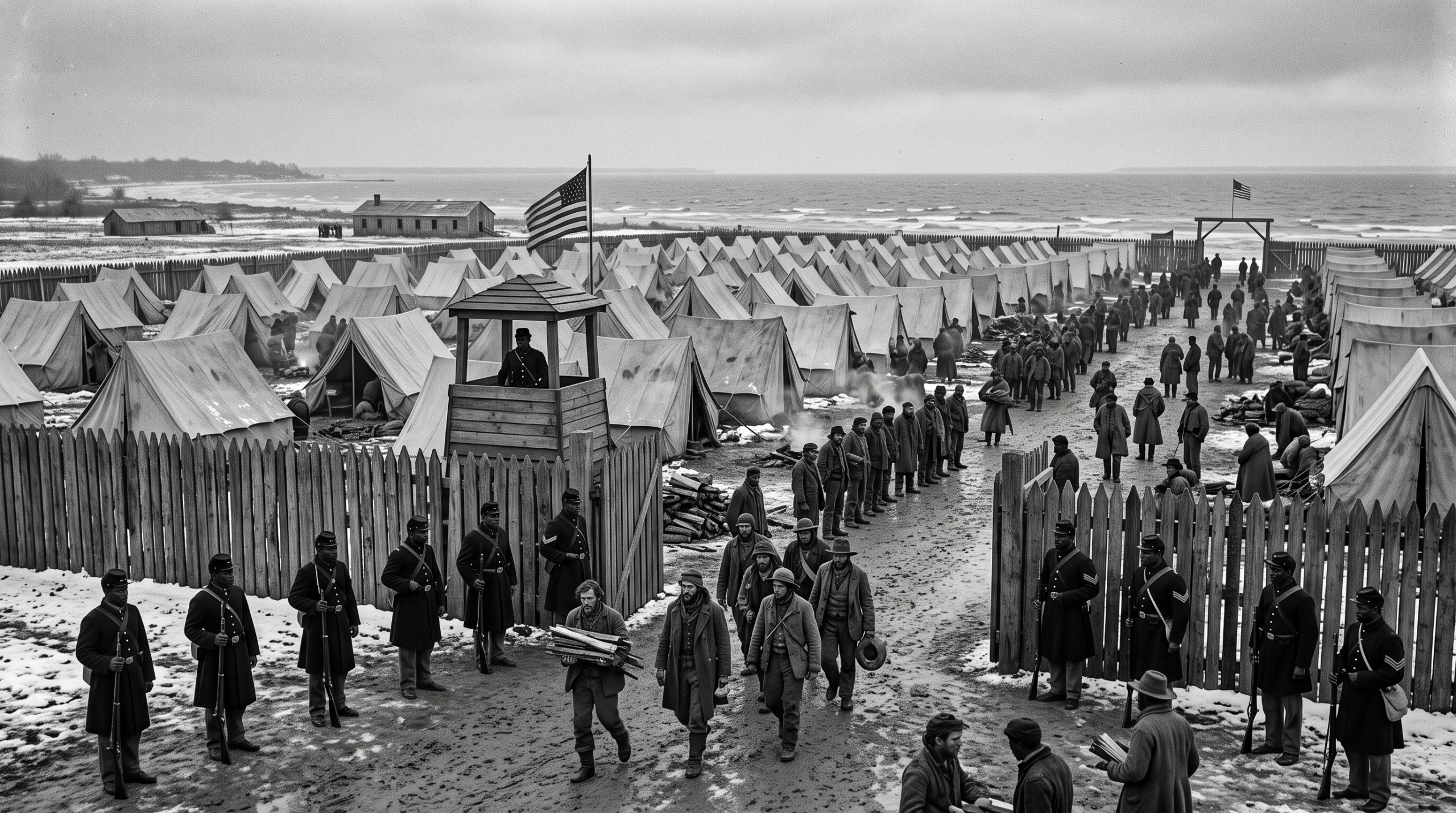
The prison compound occupied a large open area enclosed by wooden fencing. Most prisoners lived in tents rather than permanent barracks. Guard towers and armed patrols watched the perimeter, while military vessels monitored the nearby waterways.
Conditions Inside the Prison Camp
Life inside Camp Hoffman was extremely difficult. Overcrowding placed enormous pressure on food supplies, sanitation systems, shelter, medical services, and clean water. Prisoners were exposed to the peninsula’s harsh coastal weather, including intense summer heat, heavy rain, strong winds, winter cold, and damp conditions.
The low elevation of the camp made drainage a continuing problem. Rain could turn the ground muddy, while cold winds crossed the open peninsula with few natural barriers. Many prisoners lacked adequate clothing, blankets, or shelter for winter conditions.
Food was limited and often unpopular with prisoners. Rations generally included basic items such as bread, meat, beans, soup, or cornmeal, but quality and quantity varied. Prisoners sometimes supplemented their rations by purchasing or trading goods when opportunities were available.
A surviving drawing held by the Library of Congress depicts prisoners buying and selling food and other items near the water. Created by a Confederate soldier who was held at Point Lookout from 1864 to 1865, the image offers a rare personal view of economic activity inside the camp.
Disease posed one of the greatest dangers. Overcrowding, inadequate sanitation, contaminated water, poor nutrition, and exposure helped illnesses spread. Smallpox, pneumonia, dysentery, typhoid fever, and other diseases affected prisoners. Medical care was available, but the number of sick men could overwhelm the camp’s resources.
Deaths at Point Lookout remain one of the most sensitive parts of the site’s history. Historical accounts do not always agree on exact totals, partly because recordkeeping methods and classifications varied. However, thousands of prisoners died while confined at the camp, primarily from disease and the effects of harsh conditions.
African American Union Soldiers at Point Lookout
African American Union troops played an important role at Point Lookout. Members of United States Colored Troops units served as guards, performed military duties, and helped maintain Union control over the prison facility.
Their presence carried deep historical meaning. Many of the Confederate prisoners they guarded had fought for a government established partly to preserve slavery. Some prisoners had previously enslaved African Americans or came from communities where slavery shaped the economy and social order.
The relationship between Black Union guards and Confederate prisoners could be tense. For African American soldiers, military service represented a claim to freedom, citizenship, respect, and national belonging. Wearing a United States uniform and guarding captured Confederate soldiers demonstrated how dramatically the war was changing the country.
The service of United States Colored Troops at Point Lookout connects the park not only to military history but also to the larger history of emancipation and civil rights. Their experiences deserve an important place in any complete account of the site.
Fort Lincoln and the Defense of the Peninsula
The Union Army constructed defensive works at Point Lookout to protect the hospital, prison, supply areas, and surrounding waterways. The primary fortification was known as Fort Lincoln.
Unlike large masonry forts, Fort Lincoln was primarily an earthwork defense. Soldiers built embankments, trenches, gun positions, and other protective features using soil and timber. The fort was positioned to defend the peninsula from possible Confederate attack.
A major assault on Point Lookout never occurred. Nevertheless, the possibility was taken seriously. Confederate leaders considered plans to free prisoners, and Union officials understood that a successful raid could release thousands of captured soldiers.
Portions of the Civil War earthworks remain visible near the Potomac River side of the park. Time, vegetation, erosion, and development have altered the original structure, but the surviving landscape helps visitors understand the scale of military activity once concentrated on the peninsula.
Daily Life Beyond the Prison Fence
Point Lookout was more than a prison camp during the war. It functioned as a large military community with hospital wards, headquarters, storage facilities, kitchens, docks, guard stations, workshops, offices, and living quarters.
A detailed 1864 view preserved by the Library of Congress identifies dozens of locations associated with Hammond General Hospital and the prisoner-of-war depot. The illustration demonstrates that Point Lookout had become an extensive federal installation rather than a small temporary camp.
Steamboats and sailing vessels regularly arrived with prisoners, patients, military personnel, food, medical equipment, mail, and supplies. Workers repaired structures, distributed rations, cared for patients, maintained records, guarded prisoners, and transported materials throughout the complex.
Civilians also lived or worked near the installation. Nurses, laundresses, merchants, contractors, lighthouse personnel, and family members added to the peninsula’s population. For several years, Point Lookout became one of the busiest places in southern Maryland.
The End of the Civil War and Closure of the Camp
After the Confederacy collapsed in 1865, prisoners at Point Lookout began taking loyalty oaths and receiving authorization to return home. The release process took time because officials had to verify identities, complete records, arrange transportation, and determine the status of individual prisoners.
The prison camp gradually emptied. Hospital operations also declined as the number of wounded and sick soldiers decreased. Buildings were removed, abandoned, sold, reused, or damaged by weather. The large military complex that had transformed the peninsula began disappearing from the landscape.
For former prisoners, soldiers, nurses, and workers, Point Lookout remained a powerful memory. Personal letters, diaries, sketches, photographs, military records, and family stories preserved different perspectives on the camp. These sources sometimes conflict because people experienced the same place under very different circumstances.
Point Lookout After the Civil War
Following the war, Point Lookout returned to a quieter existence. The lighthouse continued operating, and maritime activity remained important. The peninsula also attracted visitors interested in fishing, boating, coastal scenery, and recreation.
At different times, developers attempted to promote Point Lookout as a resort destination. Its waterfront location offered potential for hotels, vacation cottages, beaches, and recreational facilities. However, the area’s remoteness, storm exposure, mosquitoes, flooding, and transportation limitations made large-scale resort development difficult to sustain.
Storms repeatedly affected the peninsula. Its low elevation and exposed location allowed wind and water to damage buildings and reshape the shoreline. Erosion gradually removed or buried parts of the historic landscape. Many Civil War structures vanished, leaving earthworks, archaeological remains, documents, illustrations, and memorials as evidence of the past.
The Creation of Point Lookout State Park
Maryland acquired land at Point Lookout during the 20th century as part of a broader effort to preserve natural areas, provide public recreation, and protect historically important places.
Point Lookout State Park eventually grew to include beaches, fishing areas, trails, picnic grounds, campsites, boat access, historic features, and interpretive facilities. The park’s creation helped preserve the peninsula from more intensive private development while making it accessible to the public.
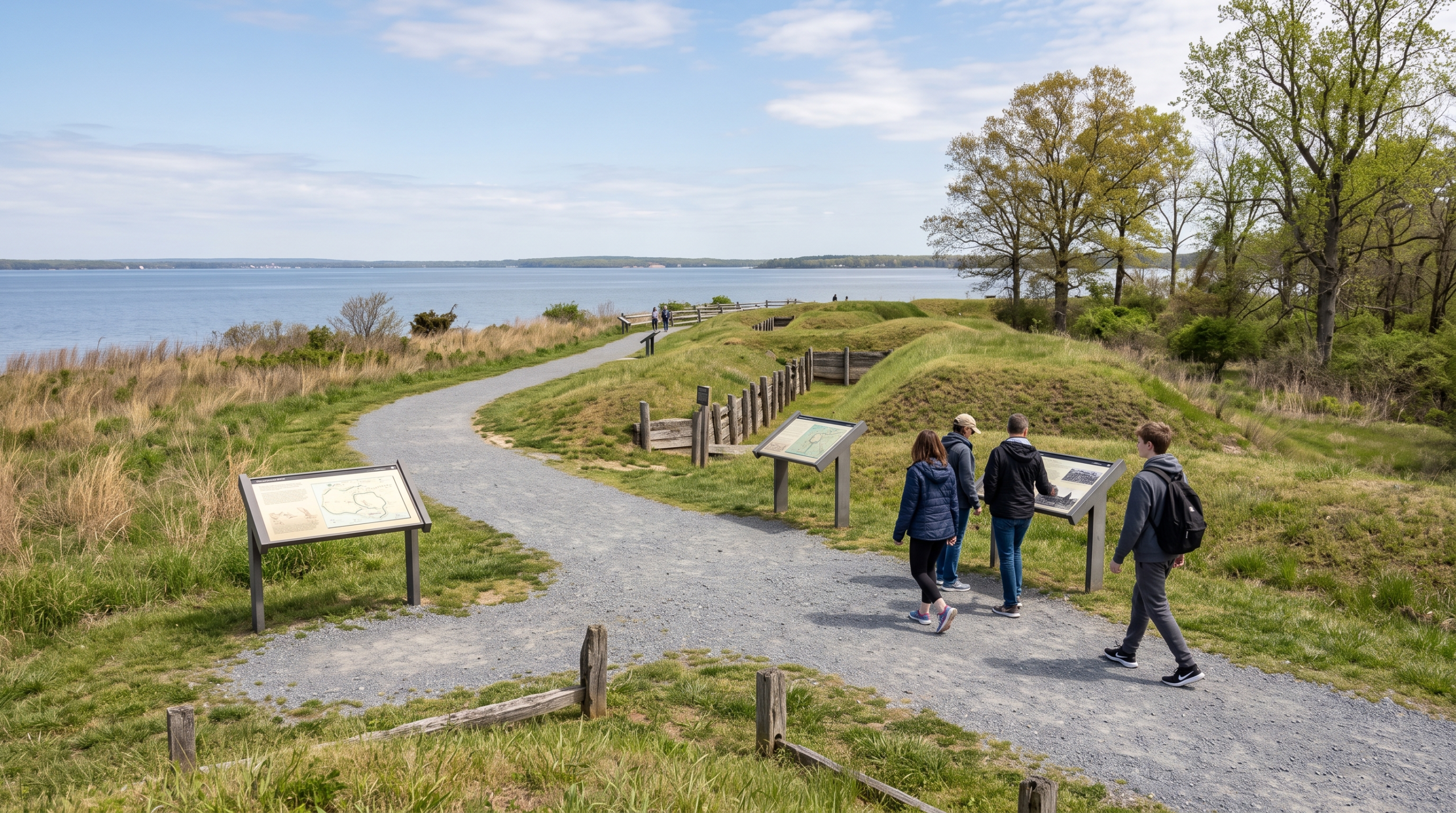
Balancing recreation and historic preservation remains an important responsibility. Visitors may arrive to fish, paddle, camp, or enjoy the scenery without realizing that they are walking through the remains of a major Civil War site. Interpretive signs, programs, memorials, preserved earthworks, and museum exhibits help connect the modern landscape to its past.
Historic Sites Visitors Can Explore
Although most wartime buildings no longer survive, several features help tell the story of Point Lookout. The lighthouse remains the park’s best-known structure. Its location at the tip of the peninsula illustrates why ships needed a navigational light where the Potomac River meets the Chesapeake Bay.
Visitors may also see surviving portions of Fort Lincoln’s earthworks. These remains are less visually dramatic than a stone fortress, but they offer a direct physical connection to the Union military defenses constructed during the Civil War.
Interpretive markers identify areas associated with Hammond General Hospital, Camp Hoffman, military operations, and the people who lived or worked at Point Lookout. Historic programs may include demonstrations, guided walks, educational presentations, or special events, depending on park operations and seasonal availability.
Before traveling, visitors should check the official Maryland Department of Natural Resources Point Lookout State Park page for current information about hours, closures, facilities, regulations, and park alerts:
The Point Lookout Confederate Cemetery and Memorial
The remains of Confederate prisoners who died at Point Lookout were eventually reinterred at a cemetery near the park. The site is separate from the main recreational area and contains monuments commemorating the dead.
The cemetery is a place for historical reflection. Visitors should approach it respectfully while recognizing the broader context of the Civil War. The prisoners buried there served the Confederacy, a government whose formation and war effort were inseparable from the defense of slavery.
Understanding the cemetery does not require ignoring suffering, nor does acknowledging suffering require overlooking the cause for which the Confederacy fought. Responsible historical interpretation can recognize the humanity of individuals while also explaining the political and moral realities of the conflict.
Legends and Ghost Stories of Point Lookout
Point Lookout is frequently described as one of Maryland’s most haunted places. Stories tell of unexplained footsteps, voices, shadowy figures, lights near the lighthouse, and apparitions wearing Civil War-era clothing.
The park’s reputation is not surprising. Thousands of people suffered and died on the peninsula, and many historic structures disappeared while memories of the events remained. The isolated waterfront, fog, wind, old lighthouse, and surviving military landscape create an atmosphere that encourages ghost stories.
These legends have become part of Point Lookout’s popular identity, but they should not replace documented history. The real experiences of prisoners, hospital patients, African American soldiers, medical workers, lighthouse keepers, and local residents are more meaningful than sensational claims.
Ghost stories can inspire curiosity, but visitors should distinguish folklore from verified historical evidence. They should also avoid trespassing, disturbing memorial areas, or entering restricted structures in search of paranormal experiences.
Visiting Point Lookout State Park Today
Modern Point Lookout State Park combines historical interpretation with outdoor recreation. Depending on current conditions and facility availability, visitors may come for fishing, boating, paddling, picnicking, wildlife observation, hiking, camping, or beach access.
The surrounding waters attract anglers seeking species found in the Chesapeake Bay and lower Potomac River. Birdwatchers may observe waterfowl, shorebirds, ospreys, bald eagles, and migratory species. The park’s wetlands and coastal environments support a variety of plants and animals.
Visitors interested in history should allow enough time to explore beyond the primary recreational areas. Reading interpretive signs, viewing the earthworks, observing the lighthouse, and considering the geography can reveal why Point Lookout became such an important military location.
The park is especially powerful when visitors pause near the shoreline. The same waters that now provide peaceful views once carried hospital ships, supply vessels, prisoners, soldiers, and military patrols. Understanding that contrast is central to appreciating Point Lookout State Park history.
Tips for a Historically Focused Visit
Begin by checking the Maryland Department of Natural Resources website for current hours, entrance information, construction notices, and facility closures. Conditions at Point Lookout can change because of storms, flooding, maintenance projects, or seasonal operations.
Once inside the park, look at the landscape as well as the monuments. Notice the narrow shape of the peninsula, its low elevation, and the amount of water surrounding it. These natural features explain why Union officials believed the location could be guarded effectively and why prisoners found the environment so difficult.
Take time to read the available interpretive signs rather than visiting only the lighthouse or beach. The military hospital, prison camp, fortifications, and African American troops are all essential parts of the story.
Visitors should also prepare for coastal conditions. Weather can change quickly, and mosquitoes or other insects may be active during warmer months. Sunscreen, drinking water, insect repellent, comfortable footwear, and weather-appropriate clothing can make the visit more enjoyable.
Why Point Lookout’s History Matters
Point Lookout matters because it brings together many important themes in American history. It tells a story of Indigenous presence, European colonization, maritime development, lighthouse service, civil conflict, imprisonment, emancipation, military medicine, historical memory, and public preservation.
The site also demonstrates how landscapes can change while retaining historical meaning. Most of the original prison and hospital buildings are gone, yet the geography remains. The Potomac River still meets the Chesapeake Bay. The peninsula is still exposed to wind and water. The lighthouse continues to stand near the shoreline.
Point Lookout also encourages difficult conversations about how Americans remember the Civil War. The suffering of prisoners was real, but so was the Confederacy’s commitment to protecting slavery. African American Union soldiers experienced the site differently from Confederate prisoners. Nurses and physicians saw it through the demands of wartime medicine, while local residents witnessed the federal government transform a quiet peninsula into a massive military installation.
No single perspective tells the entire story. A responsible understanding of Point Lookout requires examining multiple experiences while remaining clear about the larger causes and consequences of the war.
Preserving Point Lookout for Future Generations
Preserving Point Lookout is challenging because the peninsula is constantly affected by natural forces. Shoreline erosion, flooding, storms, saltwater, humidity, and vegetation threaten historic resources. Archaeological remains may be fragile, while surviving structures require regular maintenance.
Visitors can support preservation by staying on designated routes, following park regulations, avoiding restricted areas, and leaving artifacts where they are found. Removing even a small object can destroy valuable archaeological context.
Public interest also supports preservation. Learning about the park, attending historical programs, sharing accurate information, and supporting responsible conservation help ensure that Point Lookout’s stories remain accessible.
Final Thoughts
Point Lookout State Park is far more than a scenic place at the edge of Maryland. It is a landscape shaped by centuries of human activity, conflict, survival, navigation, remembrance, and change.
The lighthouse recalls the generations of mariners who traveled between the Chesapeake Bay and Potomac River. The remaining earthworks reflect the Union military presence. The former hospital and prison grounds preserve stories of sickness, captivity, service, death, and endurance. The role of African American soldiers connects the site to emancipation and the long struggle for citizenship.
Today, families may picnic near waters once crossed by military transports. Anglers cast their lines from a shoreline that prisoners once watched from behind fences. Visitors photograph sunsets beside a lighthouse whose keepers experienced the peninsula in near isolation.
That combination of beauty and difficult history makes Point Lookout unforgettable. By exploring the site thoughtfully and respectfully, visitors can better understand not only southern Maryland’s past but also the larger American story preserved at the meeting of the Potomac River and Chesapeake Bay.