The story of Maryland’s founding is often told through dates, names, and political milestones. In 1634, English colonists arrived in what would become Maryland and established St. Mary’s City, the colony’s first capital. That founding moment remains one of the most important turning points in the history of the state. Yet for many visitors, the past becomes far more meaningful when it can be seen, walked through, and experienced in a way that feels immediate. That is exactly why the Maryland Dove matters.
At Historic St. Mary’s City in Southern Maryland, the Maryland Dove helps transform an early colonial story into something people can visualize and remember. Rather than learning about seventeenth-century settlement only through text panels or timelines, visitors can step aboard a full-scale sailing vessel and imagine what maritime travel, trade, labor, and everyday shipboard life may have looked like in the early colonial Chesapeake.
For anyone interested in Maryland history, maritime heritage, Chesapeake culture, or educational travel in the United States, the Maryland Dove stands out as one of the region’s most engaging living-history attractions. It is not simply a beautiful wooden ship on the water. It is a powerful teaching tool that connects the founding of Maryland to the realities of exploration, colonization, commerce, and survival in the seventeenth century.
Why the Maryland Dove Is So Important
The original Dove was one of the two ships traditionally associated with the 1634 voyage that brought English settlers to Maryland. The Ark carried most of the passengers, while the smaller Dove traveled alongside it. Together, those ships have become enduring symbols of Maryland’s colonial beginnings.
The modern Maryland Dove at Historic St. Mary’s City is not the original ship, of course. Instead, it is a carefully researched representation that helps interpret the history of the founding period. That distinction matters. The value of the vessel is not based on being an untouched artifact from the seventeenth century. Its importance lies in the way it makes history visible, tangible, and easier to understand for modern audiences.
At a time when many people consume information through short digital content, the Maryland Dove offers a different kind of historical experience. It asks visitors to slow down and think about wind, water, navigation, woodcraft, shipboard labor, and the uncertainty of transatlantic travel. It helps explain that Maryland’s founding was not just a political act on paper. It was also a physical journey made possible by maritime technology and the people who operated it.
A Floating Link to Maryland’s Founding Story
Historic St. Mary’s City is one of the most significant heritage destinations in Maryland because it preserves and interprets the site of the colony’s first capital. The museum is known for archaeology, reconstructed spaces, living history, and research into the diverse communities that shaped early Maryland. Within that larger landscape, the Maryland Dove serves as one of the most recognizable symbols of the site.
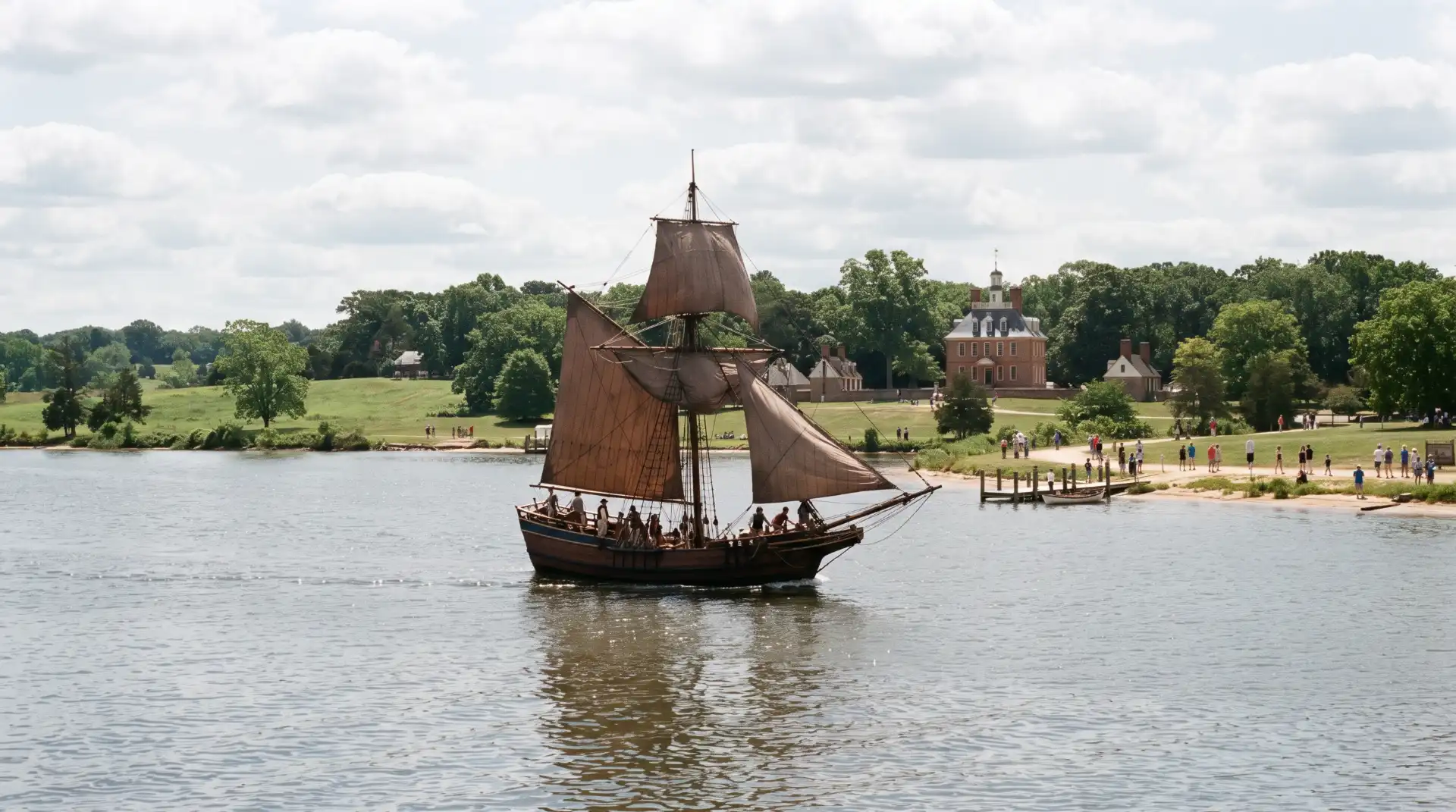
The ship gives visitors an immediate visual connection to 1634. When people see it at the waterfront, they can begin to picture how waterways functioned in colonial life. In the seventeenth century, roads were limited, overland transportation was slow, and rivers were essential arteries of movement. Ships connected communities, carried people and goods, and linked the colony to the wider Atlantic world.
That context makes the Maryland Dove especially valuable. It reminds visitors that Maryland’s early history cannot be separated from the Chesapeake Bay and its connected waterways. The colony was built in relation to water. Travel, trade, communication, and expansion all depended on it.
More Than a Replica: A Tool for Interpretation
One of the most useful ways to think about the Maryland Dove is as an interpretive vessel. It helps explain a world that no longer exists in its original form. A person standing on a modern dock can still appreciate the vessel’s lines, masts, deck space, and rigging, but the deeper educational value comes from what those features reveal.
The size of the ship can change how visitors understand early voyages. Many people imagine colonial-era sea travel in abstract terms, without really grasping how confined conditions could be. When stepping aboard the Maryland Dove, visitors can better understand how limited space was, how supplies had to be stored, and how crews lived and worked in close quarters.
Interpretation aboard the ship also opens discussion about who traveled, who labored, and who benefited from colonial expansion. The Maryland Dove can serve as a starting point for conversations about merchants, sailors, settlers, religious communities, indentured workers, and the broader systems of colonization that reshaped the Chesapeake region.
Historic St. Mary’s City and the Power of Place
The experience of the Maryland Dove is strengthened by its setting at Historic St. Mary’s City. The ship is not isolated in a generic harbor. It is interpreted within the larger story of Maryland’s first capital, where visitors can explore archaeology, reconstructed spaces, museum exhibits, and the surrounding waterfront landscape.
This combination of place and interpretation is what makes the site so effective. Visitors are not just seeing a ship; they are seeing it where the story of Maryland’s founding is actively being interpreted. That helps create a stronger sense of continuity between the vessel and the broader colonial landscape.
If readers want to learn more about the museum itself, an excellent external resource is the official Historic St. Mary’s City Maryland Dove page, which provides current visitor information and exhibit details.
Why the Chesapeake Setting Matters
The Maryland Dove belongs to a specific environmental and geographic story. Southern Maryland’s rivers, creeks, and shoreline shaped settlement patterns from the earliest colonial period onward. The St. Mary’s River, the Potomac River, and the Chesapeake Bay all played major roles in defining local life.
That maritime geography helps explain why the Maryland Dove feels so appropriate in this setting. It is not just a reconstructed ship parked for display. It sits within a region whose history has always been tied to boats, fisheries, trade, military movement, and waterfront communities.
Readers exploring the maritime side of Southern Maryland may also enjoy related SMC History articles such as Piney Point Lighthouse: History, Maritime Heritage, and Visitor Guide and Leonardtown Wharf Park and the Waterfront History of Southern Maryland. Both topics help expand the broader story of how water shaped regional identity across different eras.
Living History Makes the Ship Come Alive
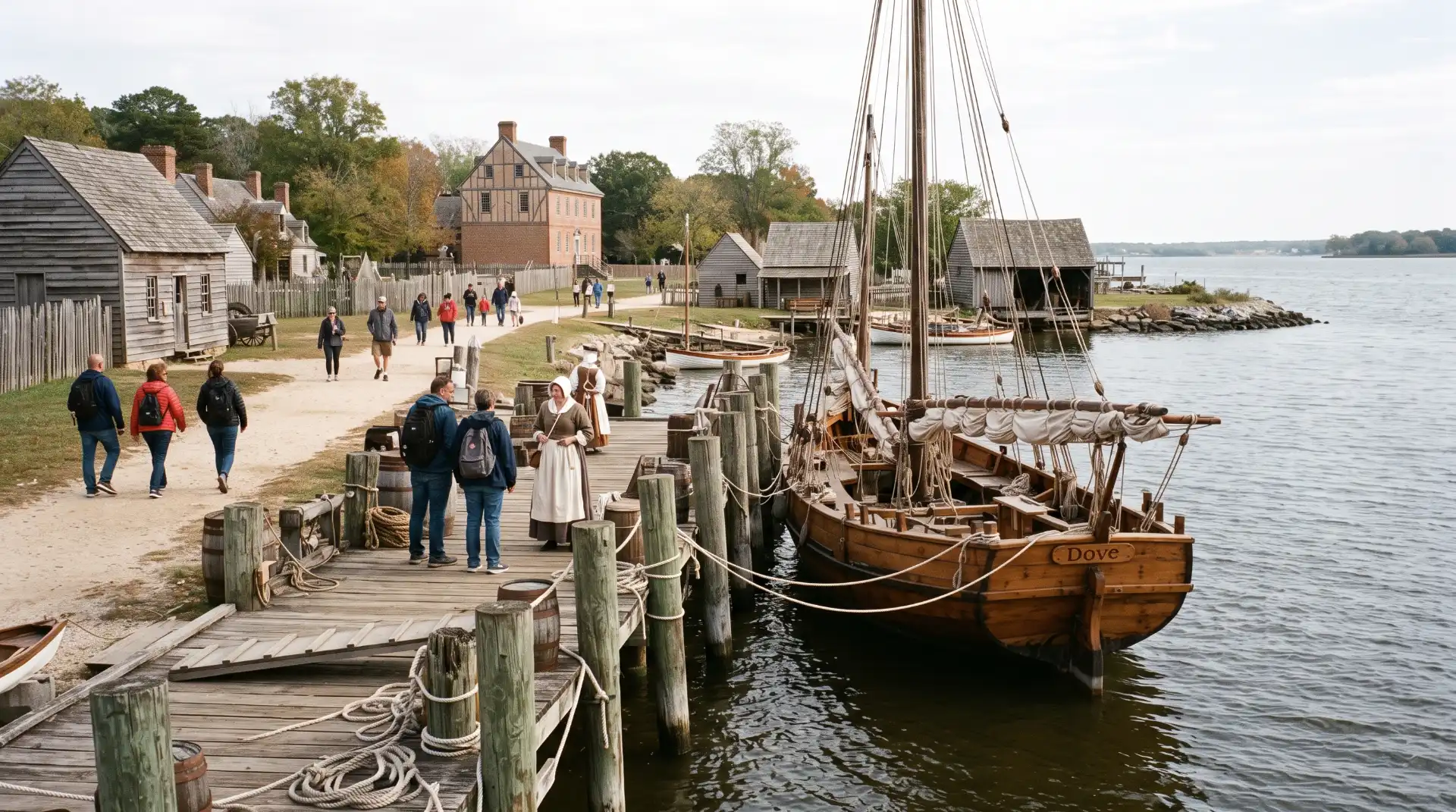
One of the greatest strengths of the Maryland Dove is the way it supports living-history interpretation. A ship can be visually striking on its own, but the educational experience becomes much richer when interpreters demonstrate tasks, explain terminology, and answer visitor questions.
When living-history staff or trained interpreters discuss navigation, rope work, cargo, deck routines, or the practical realities of shipboard life, the vessel becomes more than a scenic backdrop. It becomes a classroom. Visitors begin to imagine the noise of the water, the pull of the rigging, the weight of supplies, and the discipline required to move safely and efficiently aboard a working vessel.
This approach is especially effective for families, students, and first-time heritage travelers. Many people find maritime history more accessible when they can connect it to physical objects and demonstrations. Seeing the scale of the mast, the arrangement of the deck, or the design of the hull often communicates more than a page of description alone.
The Maryland Dove and Educational Tourism
Across the United States, heritage travel continues to attract visitors who want experiences that are both meaningful and memorable. People are increasingly interested in places where they can learn something substantial while also enjoying a scenic setting and a well-designed visitor experience. The Maryland Dove fits that trend well.
For school groups, the vessel supports lessons in colonial history, geography, maritime culture, and material life. For adult travelers, it offers an opportunity to connect broader American history to a specific and distinctive site in Southern Maryland. For local residents, it provides a reminder that some of the most important chapters in state history unfolded close to home.
The educational appeal also extends beyond Maryland. Visitors from across the United States can better understand the Chesapeake region through this ship. It highlights that colonial America was not built only in large urban centers. Tidewater settlements, maritime routes, and smaller colonial capitals also played critical roles in the nation’s early development.
A Chance to Talk About Colonization Honestly
Modern history sites work best when they interpret the past honestly and with complexity. The Maryland Dove provides an excellent opportunity for that kind of interpretation. The 1634 founding of Maryland is historically significant, but it was also part of a larger process of colonization that affected Indigenous communities and transformed the region permanently.
Presenting the ship within that fuller context makes the history more accurate and more meaningful. The voyage to Maryland was not simply a brave adventure story. It was part of English colonial expansion in a landscape already inhabited by Native peoples. It also occurred within a broader Atlantic world shaped by religious ambitions, economic goals, land acquisition, and evolving labor systems.
That is one reason the Maryland Dove remains relevant today. It can help spark thoughtful discussion rather than just nostalgia. A well-interpreted vessel invites visitors to ask who sailed, who decided, who labored, who was displaced, and how the consequences of colonization continued long after the ship’s arrival.
Craftsmanship and the Appeal of Traditional Shipbuilding
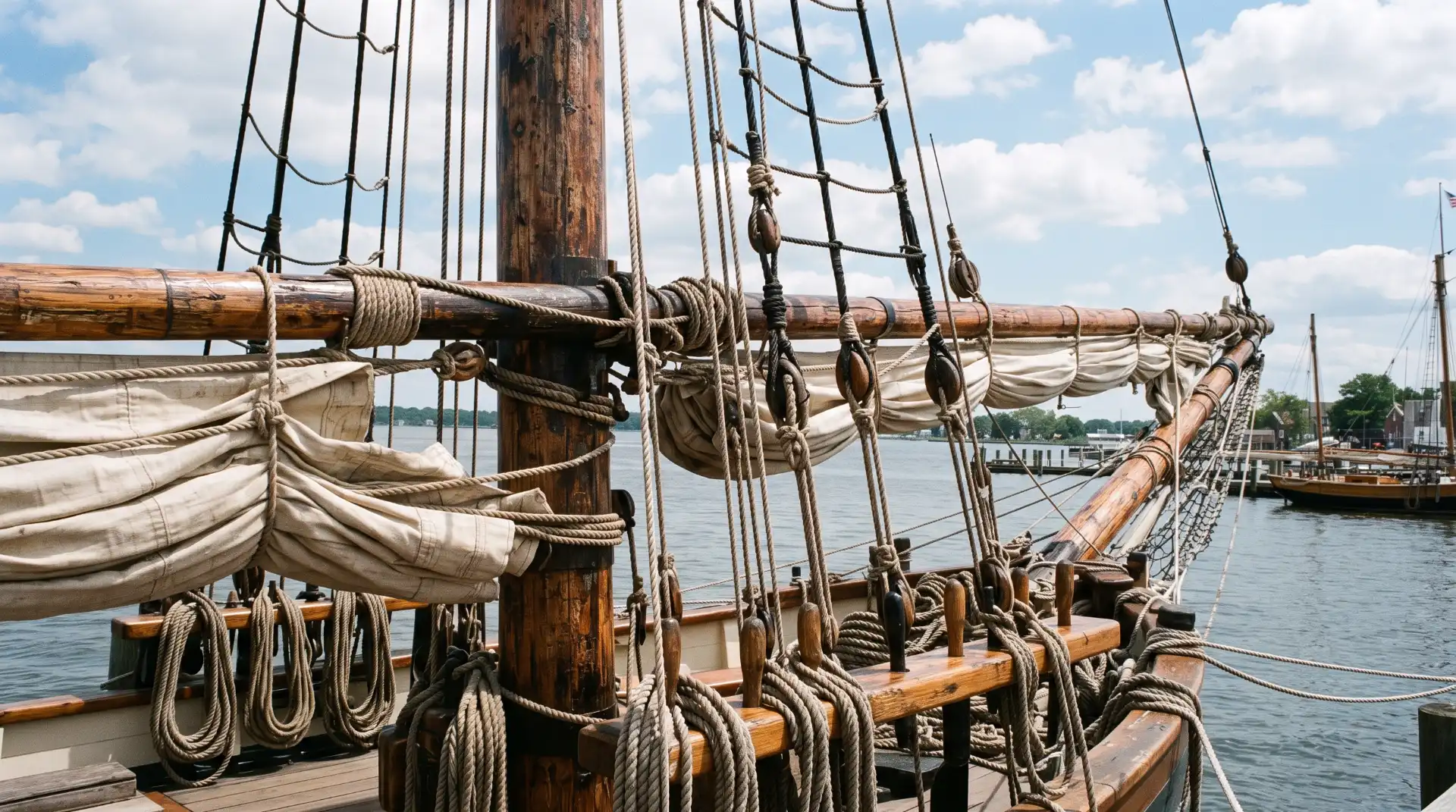
The Maryland Dove also appeals to people who appreciate craftsmanship. Wooden ships represent a high level of specialized knowledge. Hull design, joinery, rigging, sail handling, and maintenance all required skill and experience. Even visitors with only a casual interest in history often find themselves impressed by the workmanship visible in a vessel like this.
That craftsmanship becomes part of the educational story as well. It reminds visitors that early maritime travel depended on highly developed practical knowledge. The ship is a good way to discuss not just passengers and settlers, but also shipwrights, sailors, navigators, and waterfront workers whose expertise made long-distance travel possible.
For heritage tourism, this attention to craft matters. It gives visitors another layer of appreciation and helps broaden the audience beyond people interested only in political history. The Maryland Dove can speak to maritime enthusiasts, museum visitors, educators, preservation supporters, and travelers who simply enjoy distinctive historic experiences.
How the Maryland Dove Fits Into a Southern Maryland Visit
A visit to the Maryland Dove works especially well as part of a broader Southern Maryland history itinerary. Historic St. Mary’s City already offers one of the deepest historical experiences in the region, but travelers can build on that experience by exploring other nearby sites tied to water, transportation, and changing patterns of settlement.
For example, the maritime thread continues at Piney Point, where the region’s lighthouse history helps explain later navigation on the Potomac. The military and coastal landscape at Point Lookout adds another layer to the region’s waterfront story. Even Leonardtown Wharf shows how local communities depended on the water long after the founding era had passed.
By connecting these places, visitors gain a wider understanding of St. Mary’s County history. The Maryland Dove then becomes the beginning of a much longer story about how the Chesapeake shaped local identity across centuries.
Readers interested in that broader regional context may also want to explore The Complete Guide to Point Lookout State Park History for another major site where land and water meet in meaningful ways.
Why It Resonates With Modern Visitors
The Maryland Dove continues to resonate because it combines several things people value in a historic attraction. It is visually compelling. It is rooted in a significant story. It is connected to a real place. It supports active interpretation. And it offers a sensory experience that is difficult to duplicate through text alone.
There is also something emotionally compelling about standing beside a ship and imagining a departure or arrival that changed history. That sense of movement gives the founding story energy. Instead of feeling distant, the past begins to feel like something carried by wind and tide into the present.
For many visitors, that is what makes the experience memorable. They may not remember every date after their trip, but they will remember walking toward the waterfront, seeing the ship’s rigging against the sky, and understanding that Maryland’s story began not just on land, but on the water.
Maryland Dove as a Symbol of Historical Memory
Every community needs symbols that help preserve and communicate its story. In St. Mary’s County, the Maryland Dove is one of those symbols. It represents the colony’s beginnings, the maritime setting of Southern Maryland, and the ongoing work of historical interpretation.
Its symbolism is especially powerful because it bridges past and present. The seventeenth century may feel remote, but the vessel provides a visible link. It reminds visitors that history is not just contained in archives or buried in archaeological sites. It can also be interpreted through reconstructed environments and living experiences that invite public participation.
That public role matters. Sites like Historic St. Mary’s City help ensure that Maryland’s early history remains accessible to residents, educators, families, and travelers. The Maryland Dove strengthens that mission by making one of the colony’s defining stories easier to see and understand.
Final Thoughts
The Maryland Dove is far more than a scenic attraction at the waterfront. It is one of the most effective ways to understand the maritime foundations of Maryland’s 1634 founding. Through its design, interpretation, and setting at Historic St. Mary’s City, it helps modern visitors connect with the realities of colonial travel, settlement, and Chesapeake life.
For St. Mary’s County, the ship also represents something broader. It reflects how local history can be preserved in ways that are educational, visually engaging, and relevant to contemporary audiences. It turns a foundational chapter of Maryland history into an experience people can enter, explore, and remember.
Whether you are a student, a Maryland resident, a heritage traveler, or someone simply looking for a meaningful place to visit in the United States, the Maryland Dove offers a compelling introduction to the story of Maryland’s first colony and the maritime world that made it possible. In that sense, it does exactly what the best history sites should do: it carries the past forward.