Long before European settlers arrived in Maryland aboard the Ark and Dove in 1634, the region now known as St. Mary’s County was home to Indigenous communities whose lives were closely connected to the rivers, forests, wetlands, and fertile coastal lands of the Chesapeake Bay. These communities developed sophisticated systems of agriculture, fishing, hunting, trade, diplomacy, and environmental management over thousands of years. Their history is an essential part of understanding the cultural identity and historical development of Southern Maryland.
Among the Indigenous communities associated with the region were the Yaocomaco people, also spelled Yoacomaco, Yacocomico, or Yaocomico in historical documents. They occupied an important settlement along the St. Mary’s River, an area that later became the location of Maryland’s first colonial capital, St. Mary’s City. Their presence is particularly significant because the arrival of the English colonists in 1634 involved direct negotiations with the people already living there.
The story of the Yaocomaco is not simply a story about the first European settlement in Maryland. It is also a story about an established Indigenous community, its relationship with neighboring Native nations, its understanding of the Chesapeake environment, and the dramatic changes that followed European colonization.
The traditional historical narrative often emphasizes the arrival of Leonard Calvert and the establishment of Maryland. However, examining the events from an Indigenous perspective provides a much fuller understanding of what happened. The land was not an empty wilderness waiting for European settlement. It was an inhabited homeland with established communities, agricultural fields, political relationships, and generations of accumulated knowledge.
Today, archaeological discoveries and historical research continue to reveal more about the Indigenous past of St. Mary’s County. Historic St. Mary’s City and archaeological projects surrounding the former colonial settlement offer opportunities to explore the lives of the people who occupied this landscape long before Maryland became an English colony.
Understanding this history helps residents and visitors appreciate that the story of St. Mary’s County begins thousands of years before its official establishment as a colonial settlement.
The Indigenous History of Southern Maryland Before European Arrival
Thousands of Years of Native American Settlement
The Indigenous history of St. Mary’s County extends back approximately 11,000 years, according to archaeological research conducted in the region. This means Native American communities inhabited the landscape long before the development of modern settlements, colonial governments, or written historical records.
The earliest inhabitants lived in a very different environment from the Southern Maryland landscape seen today. Over thousands of years, changing climates, coastlines, vegetation, and animal populations influenced where people settled and how they obtained food.
Early communities depended heavily on hunting, fishing, gathering, and seasonal movement. Rivers and smaller waterways provided transportation routes and access to fish and other aquatic resources. Forests supplied wood, edible plants, nuts, berries, and materials for constructing shelters and tools.
Archaeological discoveries, including stone projectile points and other artifacts, provide evidence of these early occupations. Such objects help researchers understand how people hunted, prepared food, manufactured tools, and adapted to changing environmental conditions.
The archaeological record also demonstrates that Indigenous history did not begin with the Yaocomaco settlement of the early seventeenth century. Their community was part of a much longer history of Native American occupation throughout the Chesapeake region.
The Development of Permanent Agricultural Communities
Over time, Indigenous communities in the Chesapeake region developed more intensive agricultural practices. Corn became increasingly important after approximately 650 CE, helping support larger settlements and more stable patterns of community life.
Agriculture did not completely replace hunting, fishing, or gathering. Instead, these activities worked together to provide a diverse food supply.
Corn, beans, and squash became particularly important crops. Often described as the Three Sisters, these plants could be cultivated together in ways that supported productive growing systems. Corn provided a climbing structure for beans, beans contributed nutrients to the soil, and squash spread across the ground, helping reduce weed growth and retain moisture.
This agricultural system allowed communities to produce dependable food supplies while continuing to use the natural resources available throughout the Chesapeake watershed.
For the Indigenous people living in what is now St. Mary’s County, the surrounding environment offered many advantages. Fertile soil, freshwater springs, forests, marshes, and navigable waterways created favorable conditions for settlement.
The combination of agriculture and natural food resources supported communities that could remain in established villages while maintaining connections with neighboring territories.
The Chesapeake Bay as a Center of Indigenous Life
The Chesapeake Bay was much more than a geographical feature. It was a central part of Indigenous culture, transportation, trade, and economic activity.
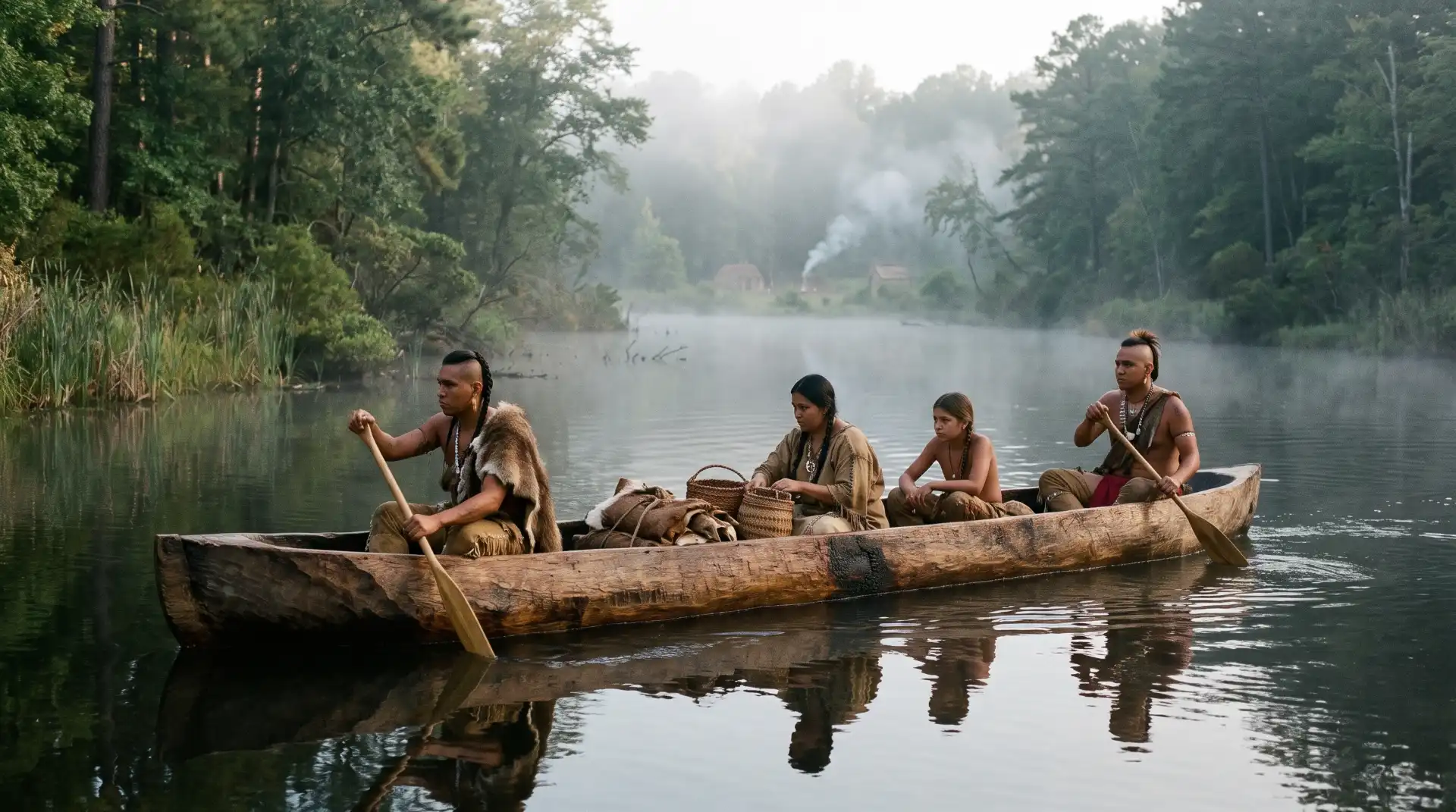
Its rivers and tributaries connected communities across large areas of present-day Maryland and Virginia. People could travel by canoe, exchange goods, maintain diplomatic relationships, and access fishing grounds through an extensive network of waterways.
The St. Mary’s River provided an especially valuable location for settlement. Its freshwater sources, surrounding forests, agricultural land, and connection to the Potomac River made it suitable for communities that relied on both land and water resources.
The Chesapeake environment also supported numerous aquatic species. Fish, shellfish, and other resources supplemented agricultural products and terrestrial game.
Seasonal changes influenced when different resources were available. Communities understood the timing of fish runs, plant growth, animal movement, and weather patterns through knowledge developed over generations.
This environmental knowledge was an important part of Indigenous life and demonstrates why the Chesapeake region supported Native communities for thousands of years.
Who Were the Yaocomaco People?
Understanding the Name and Historical Spellings
The Yaocomaco were an Indigenous community associated with a settlement along the St. Mary’s River in Southern Maryland during the early seventeenth century.
Their name appears in different forms in historical records, including Yaocomico, Yoacomaco, and Yacocomico. These variations largely reflect the challenges of translating Indigenous place names and spoken languages into English written records.
European settlers frequently recorded Native American names according to their own spelling conventions. As a result, historical documents do not always use consistent terminology.
The name Yaocomaco is especially important because it identifies both the people and the settlement associated with the area where Maryland’s first colonial capital was established.
The community spoke an Algonquian dialect and maintained connections with the wider Indigenous political and cultural networks of the Chesapeake region.
It is important to distinguish between the Yaocomaco people and the broader Piscataway political community. Although the Yaocomaco were allied with or connected to the Piscataway, they had their own local leadership, community identity, and interests.
Their Relationship With the Piscataway
During the early seventeenth century, the Piscataway paramount chiefdom held considerable influence across much of the western shore of present-day Maryland.
The Piscataway political network included multiple communities and local leaders. These relationships involved diplomacy, trade, alliances, and mutual responsibilities.
The Yaocomaco were associated with this wider regional network, although they were not simply an interchangeable part of the Piscataway community.
The region also contained other powerful Indigenous nations. The Powhatan Confederacy held influence south of the Potomac in Virginia, while the Nanticoke were prominent on the Eastern Shore. Susquehannock groups and other northern communities also participated in the political and trading networks of the Chesapeake region.
These relationships created a complicated political environment in which communities negotiated alliances, exchanged resources, and sometimes experienced conflict.
Understanding these connections is important because the Yaocomaco were not an isolated village. They were part of an established Indigenous world with its own political structures and regional relationships.
Leadership and Community Organization
Indigenous communities in the Chesapeake region maintained leadership structures that helped organize political decisions, diplomacy, and community responsibilities.
Historical accounts describe leaders using terms such as werowance and tayac. A werowance generally referred to a chief or local leader, while tayac was associated with a paramount chief or higher-ranking regional leader.
These leaders worked with advisers and other respected community members when addressing important issues.
Decisions involving alliances, trade, settlement, and relationships with neighboring communities required careful consideration.
The English colonists entering the Chesapeake region in 1634 encountered these existing political structures. Their ability to establish a settlement depended partly on negotiating with Indigenous leaders who already exercised authority over the surrounding territory.
This is an important distinction: the English did not arrive in a region without government or political organization. They entered a landscape where Indigenous communities already had systems for managing their affairs.
Daily Life in a Yaocomaco Village
Homes and Settlement Design
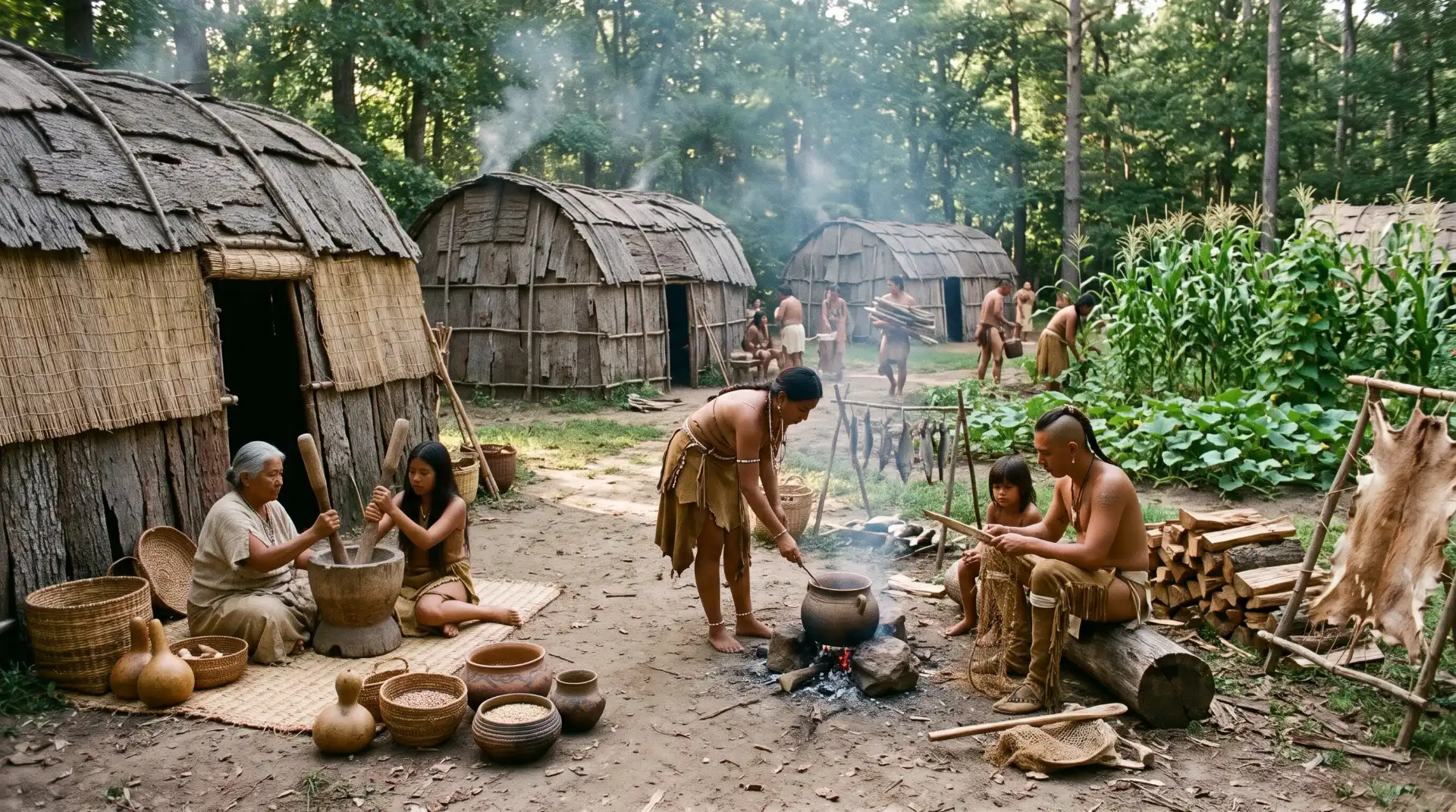
The Yaocomaco settlement near present-day St. Mary’s City was an established agricultural community rather than a temporary campsite. Its location reflected a practical understanding of the surrounding landscape and the resources necessary to support everyday life.
Historical and archaeological research describes Indigenous homes in the area as longhouses, sometimes referred to in historical terminology as witchotts. These structures provided shelter for families and were constructed using materials available in the surrounding environment.
Wood, bark, plant fibers, and other natural materials were important resources for building and maintaining homes. The precise arrangement and appearance of every Yaocomaco dwelling cannot be reconstructed with complete certainty, but archaeological evidence and comparisons with other Chesapeake Indigenous communities help researchers interpret traditional settlement patterns.
Homes were part of a larger community environment that included agricultural fields, gathering areas, storage spaces, and access routes to the water.
The village’s location was particularly advantageous because it combined elevated ground with freshwater springs and nearby estuarine resources. Residents could obtain drinking water, cultivate crops, gather natural materials, and travel along the river.
The settlement was therefore shaped by both cultural traditions and practical environmental considerations.
Food, Agriculture, and Traditional Cooking
Agriculture was an important part of Yaocomaco life. Corn, beans, and squash provided substantial food resources, while hunting, fishing, and gathering supplied additional ingredients.
Corn was particularly valuable because it could be prepared in different ways and stored for future use. It could be ground into meal, cooked into porridge, or incorporated into other dishes.
Beans supplied additional nutrients, while squash provided another dependable crop. Together, these foods formed an important part of the agricultural system used by Indigenous communities throughout the Eastern Woodlands.
Fishing was another essential activity. The St. Mary’s River and surrounding Chesapeake waterways provided access to fish and other aquatic resources. Different fishing methods were suited to different environments and seasons.
Hunting provided deer, turkey, and other animals. Forests and wetlands also offered edible plants, nuts, berries, and other resources.
Food preparation required considerable knowledge and practical skill. Families needed to understand how to preserve food, prepare seasonal ingredients, manage supplies, and make use of available natural resources.
These activities were not separate from the broader cultural life of the community. Food production involved cooperation, shared knowledge, family responsibilities, and seasonal traditions.
Clothing, Tools, and Material Culture
The Yaocomaco used materials from their environment to produce clothing, household equipment, tools, and other necessities.
Animal hides, plant fibers, wood, stone, and bone were important materials in Indigenous material culture. Different objects served different purposes, including hunting, food preparation, fishing, construction, transportation, and personal decoration.
Stone tools were particularly important in earlier periods of Chesapeake history. Archaeologists study projectile points, cutting tools, and other objects to understand how people manufactured and used equipment.
Pottery provides another important source of information. Indigenous-made ceramic vessels were used for cooking, storage, and other domestic activities. Their designs, materials, and manufacturing techniques help researchers identify cultural traditions and connections between communities.
Trade also expanded the range of materials available to Indigenous people. Items could travel considerable distances through established exchange networks, meaning that objects discovered at one archaeological site might have originated in another region.
For modern visitors, these artifacts help make Indigenous history more tangible. They reveal the practical knowledge, craftsmanship, and resourcefulness involved in everyday life long before European settlement.
The Relationship Between the Yaocomaco and the Chesapeake Environment
Rivers as Transportation Routes
Waterways were central to transportation throughout the Chesapeake region. Before the construction of modern highways, bridges, and railways, rivers and bays offered some of the most efficient ways to move between communities.
The Yaocomaco settlement benefited from its position along the St. Mary’s River. The waterway connected residents with other parts of the Chesapeake watershed and provided access to the Potomac River.
Canoes were important forms of Indigenous transportation. They could carry people, supplies, and trade goods through rivers, creeks, and sheltered coastal waters.
Knowledge of currents, tides, shallow channels, and local weather conditions was essential for safe travel.
These transportation networks also supported communication. Communities could maintain relationships, exchange information, and arrange meetings through established waterways.
The same geographic advantages later attracted English settlers, who recognized the value of the St. Mary’s River for transportation, commerce, and colonial expansion.
Readers interested in how waterways continued to influence the region’s development can also explore Leonardtown Wharf Park and the Waterfront History of Southern Maryland. Although the article focuses on later periods, it provides useful context for understanding the long relationship between Southern Maryland communities and their waterways.
Fishing, Hunting, and Environmental Knowledge
The Chesapeake region provided a wide range of natural resources, but successful use of those resources required detailed environmental knowledge.
Indigenous communities understood that fish populations, plant availability, and animal movement changed throughout the year. Different seasons created different opportunities for gathering food.
Fishing required familiarity with local water conditions and the behavior of aquatic species. Hunting involved understanding animal movement, habitats, and seasonal patterns.
The surrounding forests supplied wood for construction, fuel, tools, and other household needs. Plants were also important for food, practical materials, and traditional medicinal knowledge.
Wetlands and shoreline environments provided additional resources, including birds, shellfish, and plants adapted to coastal conditions.
This knowledge was developed through experience and passed between generations. It represented a sophisticated understanding of the local environment.
Modern Chesapeake conservation efforts increasingly recognize the importance of protecting interconnected habitats. Healthy wetlands, forests, rivers, and shorelines support wildlife and help maintain water quality.
Understanding how Indigenous communities used these environments provides a longer historical perspective on the relationship between people and the Chesapeake Bay.
Trade, Diplomacy, and Regional Indigenous Relationships
Connections With Neighboring Communities
The Yaocomaco participated in a broader network of Indigenous communities throughout the Chesapeake region.
Trade and diplomacy connected settlements across present-day Maryland, Virginia, and surrounding areas. These relationships helped communities obtain materials that were not readily available in their immediate territories.
Items exchanged through regional networks included stone, pottery, food products, animal materials, and other useful goods.
Trade was not simply an economic activity. It could also strengthen diplomatic relationships and support alliances.
Communities sometimes exchanged gifts during important meetings or negotiations. Such exchanges could communicate respect, establish trust, and reinforce relationships between leaders.
The Yaocomaco’s connections with the Piscataway were particularly important because the Piscataway political network exercised substantial influence over the western Chesapeake region.
These relationships formed part of an established political landscape that European settlers had to navigate when entering Maryland.
Regional Conflicts and Security Concerns
Indigenous communities in the Chesapeake region also faced political and military challenges.
Historical research describes conflicts involving northern groups, including Susquehannock and Massawomeck forces. Competition over territory, resources, trade, and political influence could create periods of instability.
The Yaocomaco and neighboring Piscataway communities were therefore not living in an entirely peaceful environment before European settlement.
Understanding this context helps explain why the arrival of English settlers presented both potential opportunities and serious risks.
New trading relationships could provide access to unfamiliar tools and materials. However, European expansion also threatened established territorial arrangements and created uncertainty about future access to land and resources.
The Indigenous leaders who negotiated with the English had to consider these competing possibilities.
1634: The Arrival of the English Colonists
The Voyage of the Ark and Dove
One of the most important turning points in St. Mary’s County history occurred in March 1634, when English colonists arrived in the Chesapeake region aboard the Ark and Dove.
The expedition was led by Leonard Calvert, who had been appointed governor of the new Maryland colony by his brother, Cecil Calvert, the second Lord Baltimore.
The English settlement was established under a royal charter granted by King Charles I in 1632. The Calvert family hoped to develop a profitable colony while providing a place where Catholics could practice their religion with greater freedom than was possible in England at the time.
The settlers first landed on St. Clement’s Island on March 25, 1634. This date is now celebrated as Maryland Day.
After their arrival, the expedition moved farther up the Potomac River and eventually reached the St. Mary’s River, where they encountered the Yaocomaco settlement.
The location offered many advantages for a new colony, including a navigable waterway, access to freshwater, agricultural land, and proximity to the wider Chesapeake transportation network.
However, the English were not entering an unoccupied landscape. The Yaocomaco already maintained a community in the area.
Negotiations With the Yaocomaco Leadership
According to historical accounts, Leonard Calvert and the Yaocomaco leadership negotiated an arrangement that allowed the English settlers to occupy part of the existing village.
The negotiations were conducted with the assistance of Henry Fleet, an English trader and interpreter who possessed knowledge of regional Indigenous languages and political relationships.
The agreement involved the exchange of goods, including textiles, axes, hoes, and other metal tools.
The colonists were permitted to occupy approximately half of the settlement, while the Yaocomaco retained the other portion until the autumn harvest.
This arrangement was significant because it allowed the two communities to occupy the same general settlement area during the initial period of English colonization.
The Yaocomaco needed time to harvest their crops before leaving the portion of the village that had been allocated to the newcomers.
The agreement also demonstrates that Indigenous leaders exercised decision-making authority during the initial stages of the English settlement.
However, the transaction should not be interpreted as a simple modern real estate purchase. European and Indigenous communities could have understood land use, territorial authority, and the meaning of negotiated agreements differently.
The surviving written accounts were primarily produced by European observers, leaving important questions about the Yaocomaco understanding of the agreement unanswered.
The First Years of Coexistence
The early relationship between the English settlers and the Yaocomaco involved trade, communication, and the exchange of practical knowledge.
English accounts indicate that Indigenous residents helped the newcomers understand how to grow and prepare corn. This knowledge was particularly valuable because the English colonists were unfamiliar with many aspects of the local environment.
The settlers had arrived after a long Atlantic voyage and needed to establish a dependable food supply.
Indigenous agricultural knowledge helped them understand the local growing conditions and the preparation of unfamiliar crops.
Trade also played an important role. Metal tools and textiles were useful to Indigenous communities, while the colonists benefited from access to local knowledge and resources.
The early interactions were not without tension, however. Differences in expectations, competition for land, and the growing English population created increasing pressure.
The relationship that initially involved negotiation and coexistence gradually became more difficult as colonial settlement expanded.
The Establishment of St. Mary’s City
The English settlement eventually developed into St. Mary’s City, which became Maryland’s first colonial capital.
The community grew around the location of the earlier Yaocomaco settlement. Fortifications, government buildings, residences, commercial facilities, and agricultural properties gradually changed the landscape.
The Maryland colony’s development was closely connected to the surrounding waterways and the tobacco economy.
As more settlers arrived, pressure on Indigenous land increased. Colonial authorities and private landowners increasingly sought control over territory that Native communities had occupied and used for generations.
The growth of St. Mary’s City therefore represented a major transformation in the region.
It marked the beginning of a colonial government, but it also accelerated the displacement of Indigenous communities and changed the traditional use of the land.
The story of the Maryland Dove provides another perspective on this period. Readers can explore Maryland Dove: Sailing Into the Story of Maryland’s 1634 Founding to learn more about the voyage and the maritime circumstances surrounding the establishment of the colony.
Displacement and the Decline of the Yaocomaco Settlement
Increasing Colonial Pressure
The initial arrangement between the English settlers and the Yaocomaco did not prevent future conflicts.
As the colonial population increased, settlers began occupying more land and establishing plantations along rivers and creeks.
The expansion of agriculture created competition over land and natural resources. Indigenous communities faced increasing restrictions on their ability to use traditional territories.
Colonial livestock also caused problems. Pigs and cattle could damage agricultural fields, consume crops, and interfere with Indigenous land-use practices.
These pressures were part of a wider pattern of European colonial expansion throughout the Chesapeake region.
Although the early relationship between the Yaocomaco and the English involved negotiation, the balance of power increasingly shifted toward the colonial government.
The colonists possessed expanding military, political, and economic resources. Their growing presence changed the conditions under which Indigenous communities could maintain their traditional ways of life.
The Murder of the Yaocomaco Leader in 1642
One of the most serious events in the history of the Yaocomaco community occurred in 1642.
Historical research associated with the St. Mary’s Fort archaeological project records that an English colonist named John Elkin murdered the Yaocomaco tayac.
The surviving record does not establish a clear motive for the killing.
Nevertheless, the event demonstrates how deteriorating relations could lead to direct violence against Indigenous leadership.
For a community whose political and social organization depended on recognized leaders, the murder of a tayac was particularly serious.
It also occurred during a period when colonial settlement was expanding and Indigenous territorial control was under growing pressure.
The murder should not be treated as an isolated incident without considering the larger colonial environment. It was part of a period of profound disruption for Native communities throughout Southern Maryland.
Migration Toward Virginia
Following the murder of their leader and the increasing pressures associated with English settlement, the Yaocomaco moved away from their original settlement.
Historical research indicates that they retreated into Virginia, where they eventually merged with the Matchotics, a Native community associated with Virginia’s Northern Neck.
This movement represents an important chapter in the history of Indigenous displacement in the Chesapeake region.
However, the available documentation is limited. Researchers cannot reconstruct every family’s experience, the exact routes taken, or the precise timing of all departures.
It is also important not to interpret the absence of later colonial records under the name Yaocomaco as proof that every member of the community disappeared.
Indigenous communities frequently changed locations, formed new alliances, and became identified under different names in colonial records.
The Yaocomaco experience should therefore be understood as a story of displacement and historical transformation, rather than a simplistic narrative of a people who vanished.
Archaeological Evidence of the Yaocomaco People
What Archaeologists Have Discovered at St. Mary’s City
Archaeology plays an essential role in understanding the Indigenous history of St. Mary’s County because written records from the early seventeenth century are limited and were largely created by European settlers.
Artifacts recovered from archaeological sites provide physical evidence of how people lived, worked, traveled, and interacted with their environment.
At St. Mary’s City, archaeological research has revealed evidence of Indigenous occupation extending thousands of years before the arrival of the English.
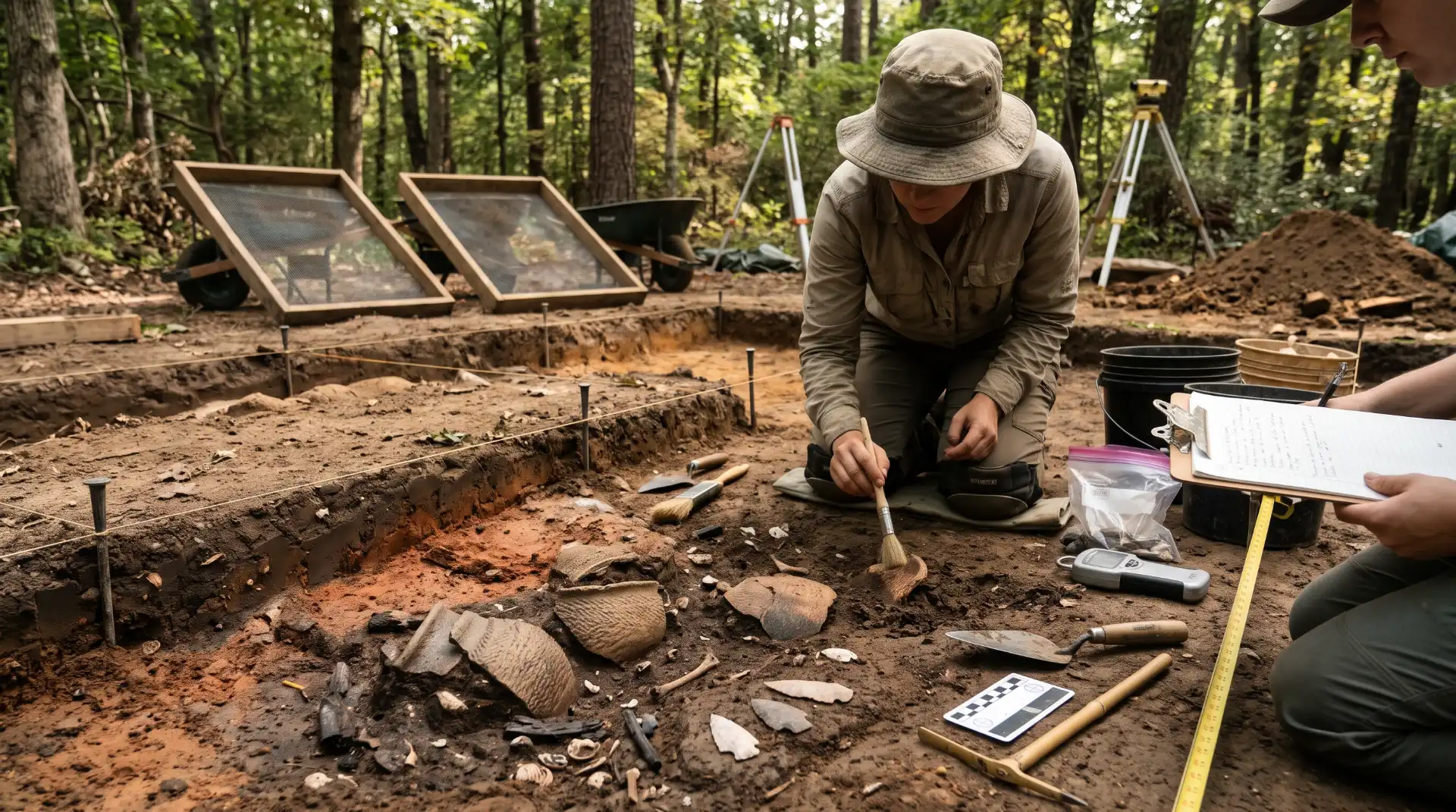
Researchers have identified stone tools, pottery fragments, and other objects associated with Native American activity. These discoveries help establish the long history of human occupation at the location.
The archaeological record also provides evidence of the cultural interactions that took place after 1634.
One particularly interesting discovery involves Native-made tobacco pipes found at English colonial sites. Research has identified these objects in quantities dating approximately from 1640 through 1675.
Their presence suggests that Indigenous material culture continued to influence colonial life even as European settlement expanded.
These discoveries challenge the idea that Indigenous and European communities existed in completely separate cultural worlds. Trade, exchange, adaptation, and interaction continued after the initial settlement period.
The Importance of the St. Mary’s Fort Archaeological Project
The St. Mary’s Fort archaeological project has contributed significantly to understanding the earliest years of Maryland’s colonial settlement.
Researchers have used archaeological techniques, including geophysical investigations and excavation, to locate and study the remains of the original fort.
The project also examines the Indigenous occupation that existed before the fort was constructed.
The location is particularly important because the colonial settlement developed directly within the earlier Yaocomaco landscape.
Archaeologists must therefore consider several historical periods when studying the site. Evidence of Indigenous activity can exist alongside remains associated with the colonial town and later agricultural properties.
This makes St. Mary’s City an unusually valuable archaeological landscape.
It provides an opportunity to examine thousands of years of human occupation within one geographical area.
For readers interested in the research, the Leonardtown Wharf Park and the Waterfront History of Southern Maryland provides a detailed account of the Indigenous settlement, the arrival of the English, and the archaeological investigation of the fort.
How Archaeologists Reconstruct Indigenous Life
Archaeologists cannot simply look at an artifact and immediately determine everything about the person who used it.
Instead, researchers examine the location where objects are discovered, the materials from which they were made, their manufacturing techniques, and their relationships with other archaeological evidence.
For example, pottery fragments can reveal information about food preparation, manufacturing traditions, and connections between different communities.
Stone projectile points provide evidence of hunting technology and material selection.
Animal remains and plant remains can help researchers reconstruct historical diets and environmental conditions.
Soil analysis and archaeological mapping can also identify former activity areas, agricultural patterns, and settlement features.
Combining these different forms of evidence creates a more complete understanding of the past.
For the Yaocomaco, archaeological research is particularly important because their own written accounts have not survived in the same way as the documents produced by European colonists.
Archaeology helps recover aspects of Indigenous history that colonial records frequently overlooked.
The Indigenous Legacy in Modern St. Mary’s County
Why the Yaocomaco Story Still Matters
The history of the Yaocomaco remains important because it provides a more complete understanding of how St. Mary’s County developed.
The county’s historical identity is often associated with Maryland’s colonial founding, early religious history, maritime commerce, tobacco plantations, and the establishment of the first colonial government.
However, those developments took place within an existing Indigenous homeland.
The Yaocomaco and other Native communities had already established relationships with the landscape, developed agricultural systems, and created regional networks of trade and diplomacy.
Their history demonstrates that the region’s cultural development did not begin in 1634.
It also reminds modern residents that colonial settlement involved significant changes to Indigenous communities, including territorial displacement, political disruption, and the loss of access to traditional resources.
Recognizing this history does not diminish the importance of Maryland’s colonial founding. Instead, it creates a more accurate and inclusive understanding of the events that shaped the region.
Indigenous Influence on the Chesapeake Region
Although the Yaocomaco settlement changed following European colonization, many aspects of Indigenous knowledge and material culture continued to influence life in the Chesapeake region.
Agricultural practices, food preparation techniques, environmental knowledge, and transportation methods were important parts of early colonial survival.
Corn became an essential crop in the developing Maryland economy and diet. Indigenous knowledge helped European newcomers understand the agricultural conditions of the region.
The waterways that Native communities had used for generations also became central to colonial transportation and commerce.
Knowledge of the local environment remained important for farming, fishing, navigation, and settlement.
The influence of Indigenous communities can therefore be understood not only through surviving artifacts but also through the ways their knowledge contributed to the development of the Chesapeake region.
Indigenous Communities Still Have a Place in Maryland Today
One of the most important points to understand when studying Native American history is that Indigenous people are not simply figures from the distant past.
Native communities continue to exist throughout Maryland and the United States.
The history of the Yaocomaco should not be presented as a story in which Indigenous people disappeared when European colonists arrived.
The Maryland State Archives documents the continued presence of Native communities and identifies several organizations representing Indigenous heritage in the state.
Maryland formally recognized the Piscataway Conoy Tribe and the Piscataway Indian Nation in 2012. The state subsequently recognized the Accohannock Indian Tribe in 2017.
These are distinct contemporary tribal communities. Their recognition should not be used to make unsupported claims about the precise genealogical relationship between any modern group and the historical Yaocomaco.
Nevertheless, their continued presence demonstrates why Maryland’s Indigenous history should be understood as a living subject rather than a closed chapter.
For more information about the history and recognition of Native communities, readers can consult the Maryland State Archives’ Indigenous Peoples resources.
Visiting Historic Places Connected to Indigenous History
Historic St. Mary’s City
St. Mary’s City, Maryland
One of the best places to begin exploring the Indigenous history of St. Mary’s County is Historic St. Mary’s City.
This outdoor museum preserves and interprets the location of Maryland’s first colonial capital. Its historical exhibits, archaeological research, and reconstructed environments provide opportunities to understand the region’s early history.
The Woodland Indian Hamlet is especially relevant to visitors interested in the Yaocomaco.
The reconstructed environment helps visitors understand how Indigenous communities used available natural materials to create homes and maintain everyday life.
It also provides an opportunity to compare Indigenous and colonial settlement patterns.
Visitors should remember that a reconstructed village is an educational interpretation rather than an exact reproduction of every historical detail. The Yaocomaco left limited written descriptions of their own architecture and traditions, so museum interpretations draw on archaeological evidence and research into related Chesapeake communities.
The site is particularly useful for families, educators, and history enthusiasts who want to explore Maryland’s Indigenous and colonial past in one location.
Before visiting, check the museum’s official website for current operating hours, admission information, special programs, and exhibit availability.
The St. Mary’s River and Its Historical Landscape
The St. Mary’s River is another important part of the region’s Indigenous history.
The river was central to the Yaocomaco settlement because it provided access to freshwater, food resources, transportation routes, and connections with neighboring communities.
Today, visitors can appreciate the same general landscape that made the area attractive to Indigenous communities centuries ago.
The shoreline, wooded areas, wetlands, and nearby waterways help explain why this location supported human settlement for thousands of years.
Exploring the river also provides an opportunity to understand how geography influenced later colonial development.
The same navigable waterways that supported Indigenous transportation eventually became important routes for English ships, commercial vessels, and regional communities.
Leonardtown and Breton Bay
Leonardtown and Breton Bay provide another opportunity to appreciate the wider Indigenous history of St. Mary’s County.
Although the town’s formal development occurred much later than the Yaocomaco settlement, the surrounding landscape was already used by Indigenous communities long before colonial government and commercial activity transformed the area.
Waterways connected settlements, supported fishing, and provided transportation routes across the Chesapeake region.
Visitors can explore the modern waterfront while considering how people interacted with the same natural environment in earlier centuries.
The historical interpretation at Leonardtown Wharf is especially valuable because it connects the long history of human occupation with the later development of maritime commerce and transportation.
Combining a visit to Leonardtown with Historic St. Mary’s City provides a broader understanding of how the county’s communities developed around their waterways.
How to Explore Indigenous History Responsibly
Respecting Native American Cultural Heritage
People visiting historical locations should understand that archaeological sites are valuable cultural resources.
Artifacts, burial grounds, and other archaeological materials should never be disturbed or removed without proper authorization.
Even objects that appear ordinary or insignificant may provide important information about Indigenous history.
Removing artifacts from archaeological locations can destroy the context needed to understand when and how they were used.
Visitors should follow posted rules, respect protected areas, and avoid disturbing the landscape.
Photography and educational activities should also respect any restrictions established by museums, tribal communities, or site managers.
Supporting Indigenous Education and Historical Research
One of the best ways to support Indigenous heritage is to learn from reliable sources.
State archives, archaeological institutions, universities, museums, and contemporary Native communities provide important information about Maryland’s Indigenous past.
Visitors should also look beyond simplified historical narratives.
When studying the arrival of the English in 1634, for example, it is important to consider the Yaocomaco perspective and the consequences of colonial expansion.
The use of accurate terminology also matters. Names such as Yaocomaco, Piscataway, and other Indigenous community names should be treated with care because spelling conventions and historical classifications have changed over time.
Teachers and parents can incorporate these topics into discussions about American history, geography, archaeology, and environmental studies.
For students, the Yaocomaco story provides an excellent example of how local history connects with larger national themes, including Indigenous sovereignty, European colonization, cultural exchange, and historical preservation.
Including Indigenous Perspectives in Local Tourism
Heritage tourism can play an important role in preserving public interest in Indigenous history.
However, tourism should not reduce Native communities to historical attractions or portray Indigenous culture as something that existed only before European settlement.
Museums and visitor destinations can improve historical interpretation by including contemporary Native perspectives and acknowledging the continuing presence of Indigenous communities.
For St. Mary’s County, this means presenting the Yaocomaco as part of a much larger Indigenous history rather than treating them simply as a brief introduction to Maryland’s colonial founding.
A more complete interpretation can also help visitors understand the historical connections between the region’s natural environment, archaeological sites, colonial development, and present-day communities.
Why the Yaocomaco Should Be Part of America’s Broader Historical Story
The history of the Yaocomaco is significant beyond the boundaries of St. Mary’s County.
Their experience reflects many of the major developments that shaped early colonial America.
European settlement frequently began through negotiations with Indigenous leaders who already maintained authority over established territories.
Early relationships sometimes involved trade, cooperation, and shared use of resources. However, the expansion of colonial populations often created conflicts over land, political authority, and economic opportunities.
The Chesapeake region provides a particularly valuable setting for examining these changes because its rivers, forests, wetlands, and coastal settlements supported Indigenous communities long before European arrival.
The Yaocomaco experience also illustrates the importance of historical evidence.
European written records often described Indigenous communities from the perspective of colonists. Archaeological research helps expand the historical record by providing physical evidence of Native American life and cultural interaction.
This approach is important for understanding American history more accurately.
The story of Maryland’s founding should include the people who already lived on the land, the negotiations that allowed the settlers to establish themselves, and the consequences that followed.
By recognizing the Yaocomaco and other Indigenous communities, historians can present a more complete account of the Chesapeake region’s past.
Preserving the Indigenous History of St. Mary’s County for Future Generations
The Role of Museums and Historical Organizations
Museums and historical organizations play an important role in protecting the Indigenous history of Southern Maryland.
Archaeological preservation requires careful research, documentation, and long-term protection of historical sites. Without these efforts, valuable evidence of earlier communities could be damaged or permanently lost.
Historic St. Mary’s City demonstrates how archaeology and public education can work together. Its exhibits and reconstructed environments help visitors understand the relationship between Indigenous settlement and Maryland’s colonial development.
The St. Mary’s Fort project adds another important dimension by investigating the archaeological remains associated with the earliest years of the English settlement.
These efforts are particularly valuable because they allow new generations to learn about the region’s Indigenous history through evidence rather than relying exclusively on traditional colonial narratives.
Historical preservation also requires cooperation with contemporary Native communities. Their perspectives can help ensure that educational programs recognize Indigenous history as a continuing part of Maryland’s cultural identity.
Why Local History Matters to Future Generations
Understanding the Yaocomaco story gives residents a deeper appreciation of the place they call home.
Students who learn about the Indigenous history of St. Mary’s County can better understand how the Chesapeake environment influenced settlement, agriculture, transportation, and economic development.
Families visiting local historical sites can use these experiences to introduce children to archaeology, Native American history, and the importance of preserving cultural resources.
For local historians, the subject provides opportunities to investigate historical documents, archaeological discoveries, and the connections between Indigenous communities throughout the Chesapeake region.
The most important lesson is that local history should include the experiences of everyone who contributed to the development of a place.
St. Mary’s County has a rich historical identity, and its Indigenous heritage is one of its oldest and most important foundations.
Conclusion: Remembering the Yaocomaco Legacy in Southern Maryland
The Indigenous history of St. Mary’s County began thousands of years before the establishment of Maryland as an English colony. Long before Leonard Calvert and the settlers aboard the Ark and Dove arrived in 1634, Native American communities had developed established settlements, agricultural systems, transportation networks, and relationships with the Chesapeake Bay environment.
The Yaocomaco people were an important part of this history. Their settlement along the St. Mary’s River became the location where Maryland’s first English colonists established their community through negotiations with Indigenous leadership.
Their story includes agriculture, fishing, trade, diplomacy, cultural exchange, and the challenges created by European colonization. The initial arrangement between the Yaocomaco and the English settlers eventually gave way to increasing pressure on Indigenous territory, violence, and displacement.
Archaeological discoveries continue to provide important information about their lives and the broader history of Native American communities in Southern Maryland.
Today, Historic St. Mary’s City, the St. Mary’s Fort archaeological project, and the surrounding Chesapeake landscape offer opportunities to explore this heritage.
For residents and visitors, understanding the Yaocomaco legacy means looking beyond the familiar story of Maryland’s colonial founding. It means recognizing that the land already had a history, its own communities, and established cultural traditions long before European settlement.
Preserving this history is important not only for understanding the past but also for ensuring that future generations appreciate the Indigenous contributions that helped shape Maryland and the wider Chesapeake region.
The story of St. Mary’s County is ultimately much older and more complex than its colonial beginnings. Remembering the Yaocomaco is an essential part of telling that story honestly.
Frequently Asked Questions About the Yaocomaco People
1. Who were the Yaocomaco people?
The Yaocomaco were an Indigenous community that lived along the St. Mary’s River in Southern Maryland during the early seventeenth century. They maintained an agricultural settlement in the area that later became St. Mary’s City.
2. Where did the Yaocomaco live?
Their principal settlement was located near present-day Historic St. Mary’s City in St. Mary’s County, Maryland. The location provided access to freshwater, fertile land, forests, and the waterways of the Chesapeake region.
3. What language did the Yaocomaco speak?
Historical and archaeological research associates the Yaocomaco with an Algonquian dialect. The exact characteristics of their particular dialect are not fully documented in surviving records.
4. What did the Yaocomaco eat?
Their diet included agricultural crops such as corn, beans, and squash, supplemented by fish, shellfish, deer, turkey, and other foods obtained through hunting and gathering.
5. What happened when the English arrived in 1634?
Leonard Calvert negotiated with Yaocomaco leadership for permission to occupy part of their settlement. The agreement allowed the Indigenous residents to remain in the other portion until the autumn harvest.
6. Did the Yaocomaco help the English settlers?
Historical accounts indicate that Indigenous residents shared agricultural knowledge and traded with the newcomers. Their knowledge of local crops and food preparation helped the settlers adapt to the Chesapeake environment.
7. Why did the Yaocomaco leave St. Mary’s City?
Increasing colonial expansion, competition over land, and deteriorating relations contributed to their displacement. The murder of their leader by an English colonist in 1642 was another major event. Historical research indicates that the Yaocomaco subsequently moved toward Virginia and eventually merged with the Matchotics.
8. Are there places where visitors can learn about the Yaocomaco?
Yes. Historic St. Mary’s City features a Woodland Indian Hamlet and archaeological exhibits that help visitors understand Indigenous life in the region before and during early European settlement.
9. Are Native American communities still present in Maryland?
Yes. Maryland has contemporary Indigenous communities, including the Piscataway Indian Nation, Piscataway Conoy Tribe, and Accohannock Indian Tribe, which have received state recognition.
10. Why is the Yaocomaco history important?
Their history provides essential context for understanding Maryland’s founding, Indigenous land use, cultural exchange, colonial expansion, and the long history of Native American communities in the Chesapeake region.